

 See My Latest Article on HelloNation
Dental implants may still be possible after bone loss, but the answer depends on how much bone remains, where it is located, and whether the gums and jaw are healthy. Some people can receive an implant with minor preparation, while others need bone grafting or a different tooth-replacement plan.
For residents in Blacksburg, understanding the evaluation process can make dental discussions easier and help set realistic expectations about timing, healing, and treatment options.
Why does bone loss affect dental implants?
Dental implants are small posts placed inside the jawbone to support a crown, bridge, or denture. The bone must be wide and tall enough to hold the implant securely and protect nearby structures.
After a tooth is removed, the surrounding jawbone no longer receives pressure from a tooth root. Over time, the ridge commonly becomes narrower and shorter. Bone loss may also result from:
- Advanced gum disease
- Long-term tooth infection
- Trauma or fracture
- Wearing a removable denture for many years
- Developmental differences in jaw anatomy
- Previous implant or grafting procedures
Bone loss is not always visible from the outside. A ridge may appear reasonably full while having insufficient width or height in a critical area.
Can an implant be placed if the bone is thin?
Sometimes. A narrow ridge may be suitable for a smaller implant, but using a narrower implant is not appropriate in every location or for every biting pattern. The implant still needs enough surrounding bone for stability and long-term support.
If the ridge is too thin, bone augmentation may be recommended. This usually involves placing graft material in the deficient area and allowing the site to heal before, or sometimes during, implant placement.
Common approaches include:
- Guided bone regeneration: Graft material and a protective membrane are used to encourage bone growth in a specific area.
- Ridge augmentation: Bone is added to increase the width or height of the jaw ridge.
- Ridge expansion: A narrow section of bone is gently widened to create space for an implant.
- Socket preservation: Graft material is placed after tooth removal to limit the collapse of the extraction site.
- Sinus augmentation: In the upper back jaw, the sinus floor may be gently raised to create additional bone height.
The appropriate method depends on the shape of the defect, the location of the missing tooth, the available bone, and the condition of the surrounding tissues.
Is a bone graft always needed?
No. Some people have enough bone for implant placement even after years of tooth loss. Others have a small defect that can be managed at the same time the implant is placed.
A larger or more complex defect may require a separate grafting procedure first. Healing time varies, but several months may be needed before the site is ready for an implant. The timing is based on the amount of new bone that forms and whether the area is stable enough to support the implant.
A graft does not guarantee that an implant will be possible. Bone can remodel during healing, and some grafts may not develop enough volume or density. A backup plan may include a fixed bridge, removable partial denture, or other form of restoration.
How is bone loss evaluated?
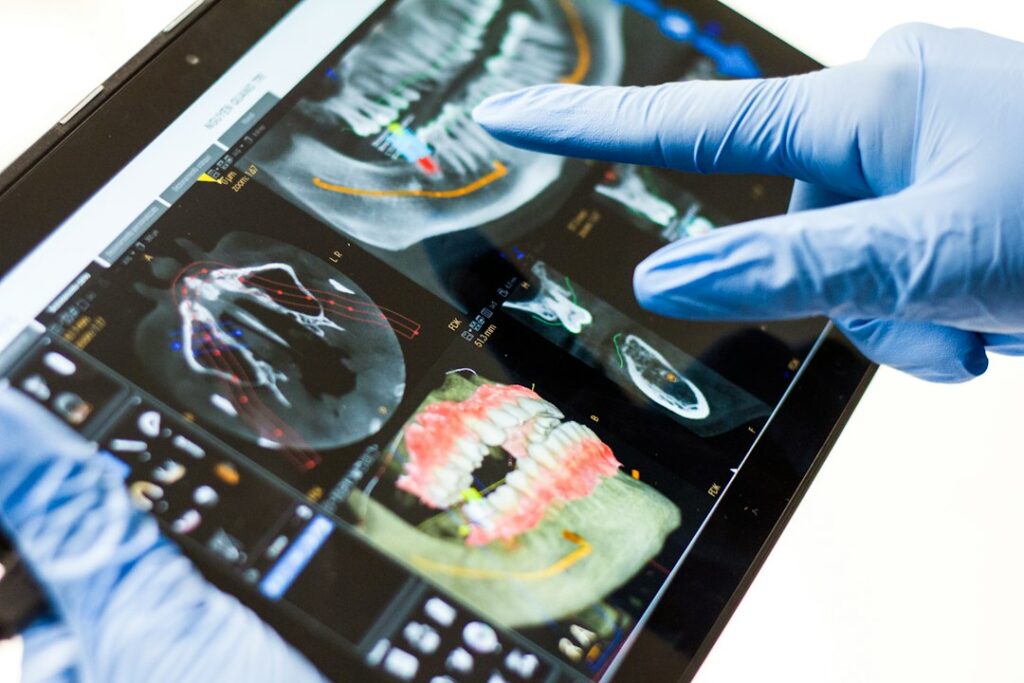
A proper evaluation usually combines an oral examination with dental imaging. Standard dental X-rays can provide useful information, but three-dimensional imaging may be needed to measure the ridge more accurately.
The assessment may examine:
- Bone height and width
- Bone density and shape
- Distance from nerves, sinuses, and neighboring tooth roots
- Gum thickness and recession
- Signs of active infection or gum disease
- The position and angle of a planned implant
- The amount of space available for the replacement tooth
The implant cannot be planned only by looking at the missing tooth. The final crown must also be considered because implant position affects appearance, chewing forces, cleaning access, and the health of the surrounding bone.
Does gum disease need to be treated first?
Yes. Active gum disease should generally be controlled before implant surgery. The same bacteria and inflammation that damage the bone around natural teeth can also affect the tissues around an implant.
A history of periodontal disease does not automatically rule out implants, but it may increase the need for careful maintenance. Bleeding, swelling, persistent bad taste, loose teeth, or drainage may indicate that infection needs attention before implant treatment is considered.
Smoking, poorly controlled diabetes, inadequate plaque control, and certain medications can also influence healing and the risk of complications. These factors should be reviewed honestly during treatment planning.

Can bone loss around an existing implant be repaired?
Sometimes, but treatment depends on why the bone was lost and how much support remains. Mild inflammation limited to the gum tissue may be reversible with improved cleaning and professional care. More advanced inflammation involving supporting bone may require surgical treatment.
Warning signs around an implant can include:
- Bleeding during brushing or flossing
- Redness or tenderness
- Pus or drainage
- Increasing gum recession
- A change in the way the crown feels when biting
- Movement of the implant or restoration
An implant that feels loose should be evaluated promptly. The crown may be loose, or the implant itself may have lost bone support; these are different problems with different treatments.
How long does the process take after grafting?
The timeline may range from several months to longer than a year in more complicated cases. A typical sequence may include removal of a damaged tooth, site preservation or grafting, healing, implant placement, another healing period, and attachment of the final restoration.
Some cases can be completed in fewer stages. Others require staged treatment because placing an implant before the bone is ready can reduce stability and compromise the result.
Seasonal routines may also affect practical planning in the local community. Winter weather, travel, school schedules, and work obligations can make it useful to understand the expected healing periods before treatment begins. Healing should not be rushed to fit a calendar.
Does age automatically prevent implant treatment?
No. Age alone is not usually the deciding factor. Overall health, bone quality, oral hygiene, medications, smoking status, and the ability to maintain regular dental care are generally more relevant.
Older adults may still be good candidates, while younger adults with uncontrolled gum disease or heavy tobacco use may face higher risks. Each case requires an individualized assessment rather than a decision based on age alone.
What questions should patients ask?
Useful questions include:
- How much bone is available in the proposed implant area?
- Is the bone loss horizontal, vertical, or both?
- Can grafting and implant placement happen together?
- How long might healing take?
- What factors could increase the risk of graft or implant failure?
- What alternatives are available if an implant is not advisable?
- How will the implant and surrounding teeth be maintained afterward?
The central point is simple: bone loss does not automatically eliminate dental implants as an option. It may change the treatment sequence, increase healing time, or require grafting. A careful evaluation of the bone, gums, general health, and planned restoration determines whether implant treatment is reasonable and how it should be approached.