

 See My Latest Article on HelloNation
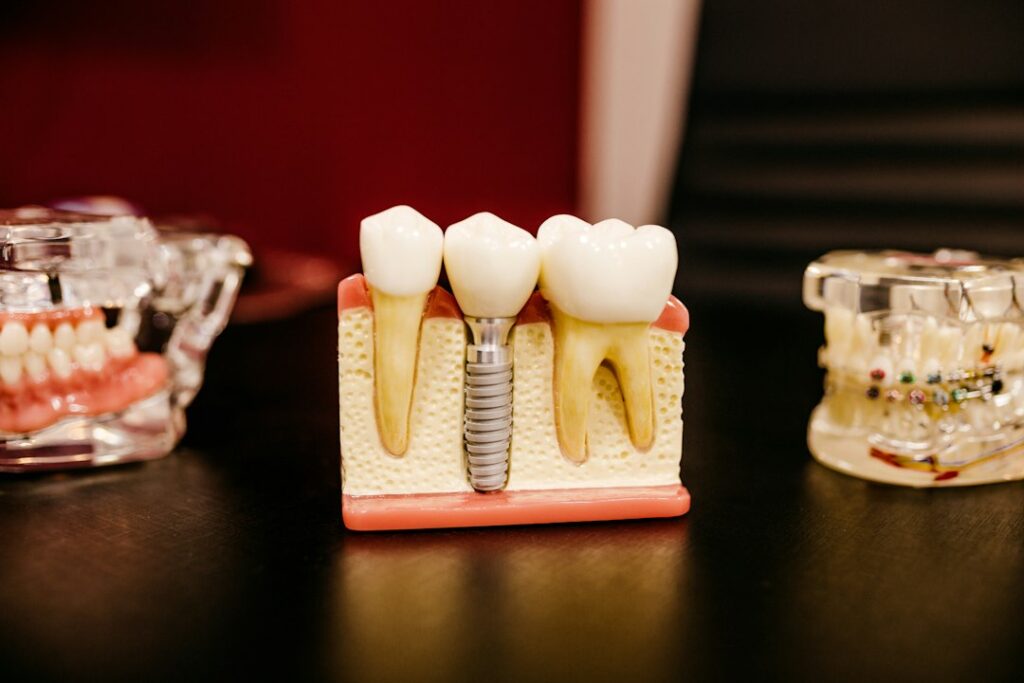
Dental implant healing is a staged process rather than a single recovery period. The gums may feel substantially better within one to two weeks, while the jawbone can require several months to bond securely with the implant. Understanding the difference between soft-tissue healing and bone healing helps explain why the final crown, bridge, or denture is often placed later.
What happens before the implant is placed?
Before surgery, the mouth and jawbone are evaluated to determine whether the implant can be placed immediately or whether additional healing is needed first. A recently extracted tooth may require time for the socket and surrounding bone to heal. Some people also need a bone graft if the jaw does not have enough healthy bone to support an implant.
The timeline may therefore include:
- Tooth removal and socket healing
- Bone grafting and graft maturation
- Implant placement
- A period of bone integration
- Abutment placement
- Final crown, bridge, or denture
These steps do not occur in exactly the same order for every patient. A straightforward single-tooth case may take less time than treatment involving several missing teeth, significant bone loss, or gum-tissue reconstruction.
Stage 1: The first few days after surgery
The initial healing stage begins as soon as the implant is placed. A blood clot forms, tissues begin closing, and the body starts controlling inflammation around the surgical area.
Mild bleeding, tenderness, swelling, or bruising can occur. Swelling is often most noticeable during the first 24 to 48 hours and then gradually improves. Discomfort commonly lasts several days, although the exact experience depends on the number of implants, whether bone grafting was performed, and individual healing patterns. ([cuh.nhs.uk](https://www.cuh.nhs.uk/patient-information/dental-implants-in-restorative-dentistry/?utm_source=openai))
Typical early instructions may include:
- Eating softer foods for a short period
- Avoiding pressure directly on the implant area
- Following prescribed or recommended pain-control instructions
- Avoiding smoking and vaping, which can interfere with healing
- Keeping the rest of the mouth clean while protecting the surgical site as directed
Residents managing recovery during a busy season may need to plan around work, school, winter travel, or physically demanding outdoor activities. The surgical instructions provided for the specific procedure should take priority over general timelines.
Stage 2: Gum healing during the first one to two weeks
The gum tissue usually begins sealing over the surgical area during the first week and may continue improving through the second week. Stitches may dissolve on their own or be removed during a follow-up visit, depending on the type used.
At this point, the surface of the gum can look unusual. Mild redness, a pale or whitish area, or a feeling of tightness does not automatically mean something is wrong. Healing tissue often looks different from normal gum tissue before it returns to a more familiar appearance.
A follow-up visit commonly occurs about one to two weeks after surgery. The purpose is to check the wound, review symptoms, and determine whether the tissues are progressing normally. ([cuh.nhs.uk](https://www.cuh.nhs.uk/patient-information/dental-implants-in-restorative-dentistry/?utm_source=openai))
Stage 3: Osseointegration—when the implant bonds with bone
The most significant part of implant healing happens beneath the gum. During osseointegration, living bone gradually grows into close contact with the implant surface. This creates the stable foundation needed to support a replacement tooth.
Osseointegration is not the same as the gum appearing healed. A person may feel comfortable while the deeper bone-healing process is still underway. This is why chewing hard foods on the implant too soon can be risky even when there is little or no pain.
Bone integration commonly takes about three to six months, although some cases require longer. Published patient guidance also describes a broader range of approximately three to nine months, depending on the person’s healing rate and the complexity of treatment. ([my.clevelandclinic.org](https://my.clevelandclinic.org/health/treatments/10903-dental-implants?utm_source=openai))
Factors that may affect this stage include:
- Bone quality and quantity
- Whether a bone graft was needed
- The location of the implant
- Smoking or vaping
- Gum disease or poor oral hygiene
- Certain medical conditions and medications
- Excessive force placed on a temporary tooth or healing implant

The absence of pain does not prove that integration is complete. Stability is assessed through clinical examination and, when appropriate, imaging.
Stage 4: Abutment placement and soft-tissue shaping
After the implant has integrated sufficiently, an abutment may be connected. The abutment is the small connector between the implant and the final replacement tooth.
Some implants are placed so the abutment is visible during healing. Others remain covered beneath the gum and require a minor second procedure to expose them. The gum then needs additional time to settle around the abutment. One patient guide from the American Academy of Implant Dentistry describes approximately two to three weeks of healing after abutment placement, although individual timing varies. ([connect.aaid-implant.org](https://connect.aaid-implant.org/hubfs/AAID%20Public%20Brochures%20PROOF%201b_Gen.pdf?utm_source=openai))
This stage helps shape the gum and creates a healthy transition around the future crown, bridge, or denture. Temporary components may be used while the final restoration is being designed.
Stage 5: Final restoration and adjustment
Once the implant and surrounding tissues are ready, records or impressions are taken for the final restoration. The replacement tooth is then attached to the abutment.
The final restoration may be:
- A crown for one missing tooth
- A bridge supported by multiple implants
- An implant-supported denture or full-arch restoration
The first few days after placement may involve minor pressure or sensitivity as the bite is adjusted. The restoration should feel secure, but it should not create persistent pain, excessive pressure, or difficulty chewing. Small adjustments may be needed as the mouth adapts.
What symptoms are expected, and which are warning signs?
Some soreness and swelling are expected after surgery, but symptoms should generally trend toward improvement. Concerning changes include pain that becomes stronger rather than weaker, swelling that continues to increase, pus or foul drainage, fever, uncontrolled bleeding, or an implant that feels loose.
Persistent numbness or altered sensation also deserves prompt attention, particularly after surgery in the lower jaw. Although many nerve-related symptoms improve, unusual or worsening sensations should not be ignored. ([cuh.nhs.uk](https://www.cuh.nhs.uk/patient-information/dental-implants-in-restorative-dentistry/?utm_source=openai))
A failed or poorly integrating implant may sometimes become loose or fail to bond with the bone. If that occurs, the implant may need to be removed and replaced after the area heals. This is different from ordinary tenderness during the early recovery period.
How can healing be protected?
The most useful habits are simple but consistent: follow the surgical instructions, avoid smoking and vaping, maintain careful oral hygiene, attend follow-up checks, and do not use a temporary tooth or healing implant to bite harder than instructed.
After the restoration is completed, daily cleaning remains necessary. Implants cannot develop cavities in the same way natural teeth do, but the surrounding gum and bone can become inflamed if plaque accumulates. Regular dental monitoring helps identify inflammation, bite problems, loose components, or restoration wear before they become more serious.
For local residents, the practical goal is to think of healing as a gradual biological process. Feeling better after a few days is encouraging, but it does not mean the implant is ready for unrestricted chewing. The gum, bone, and final restoration each have their own timetable.